Insight on financial management, product updates and news from Capassa, gathered in one place.
MCP is plumbing, not intelligence
The July revision of MCP removed much of what made the protocol demanding to operate. But MCP doesn't make an agent smarter. Aage Thorsen explains what was solved, what remains, and why MCP is right as the outer boundary, but rarely for the inner core of an agent you control yourself.
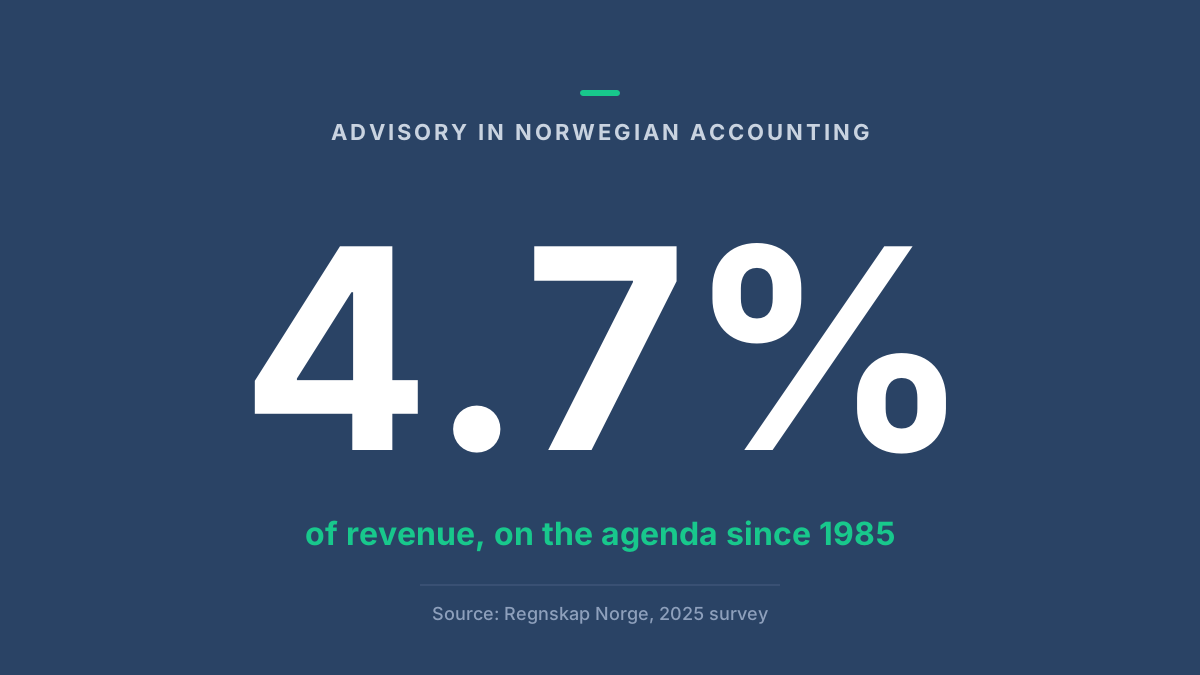
Over 40 years of advisory on the agenda. Just 4.7% of revenue.
Regnskap Norge, the Norwegian association for accounting firms, points out that its member magazine wrote as early as 1985 that consulting was becoming increasingly important for the accounting profession. More than 40 years later, advisory accounts for 4.7 percent of revenue in Regnskap Norge's 2025 survey, and no size group is above seven percent. Perhaps more discussions about the future isn't what the profession needs.
AI can give a perfect answer. Based on the wrong numbers.
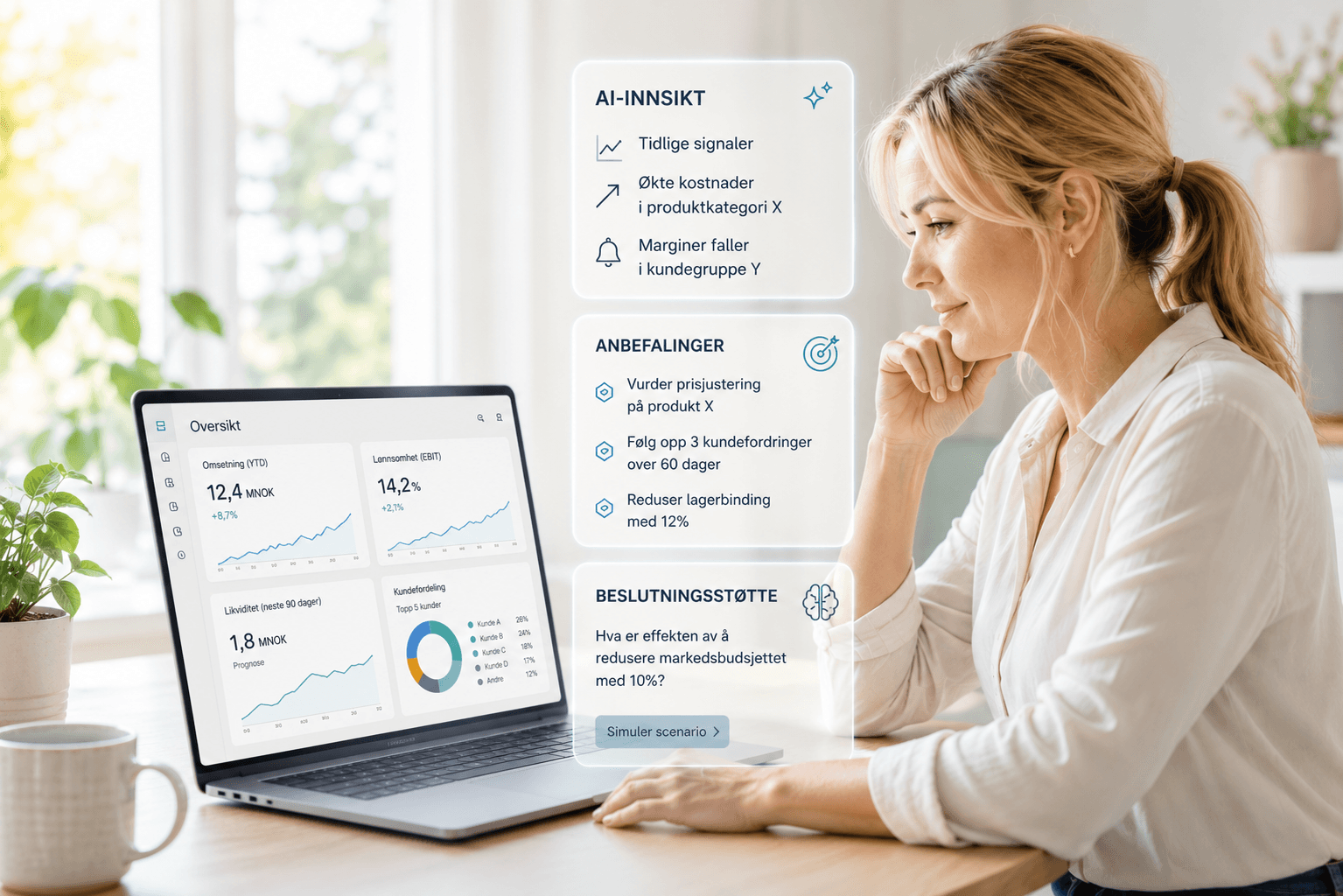
A language model can analyse a set of accounts and recommend actions in seconds. But a convincing answer isn't necessarily a correct one. If AI is to be used for financial decisions, the technology has to withstand more than an impressive demo.
The accountants on stage in London were sure AI is no threat. What if they're wrong?
On stage at the Digital Accountancy Show in London, accountants said AI isn't good enough, and a founder said they should be extremely worried. Both were certain, in front of a packed room. The founder's most important point wasn't the prediction, but that it's the client who decides whether she wants an accountant.
Maybe we don't need the PDF after all
An accountant asked for a PDF of a chart. Our answer started with a question about what she'd use it for, and ended with a right-click. The story shows what happens when technology doesn't just make old work faster, but changes what the human spends their time on.
It's the explanations AI takes, not the advisory work
For a decade, the message to the accounting industry has been to flee bookkeeping for advisory work. Norges Bank's latest network rounds show some consulting firms seeing clients solve tasks themselves with AI. What's disappearing is the explanations, not the insight, and the difference decides what accounting advisory can be priced as.
AI has spread beyond accounting: the firm's fight for position toward 2027
The SSB numbers get read everywhere as evidence that AI use is rising. Read as a map of who owns the AI agenda inside Norwegian businesses, they say something more precise: accounting was the entry point in 2023, but by 2026 AI has more home turf in the business than the firm does.
As the AI gap widens, the firm becomes the client's AI department
SSB documents that the gap in AI use between large and small firms widened in 2026. Read as a market signal, this isn't the SMB's problem. It's the clearest description yet of a service market the accounting industry already holds the raw materials for.
AI is ready. Are you?
The question is no longer just what AI can do, but whether we trust what it does. BCG turns the problem on its head: good AI governance shouldn't make AI harder to use, it should make it possible to use more of it, safely.
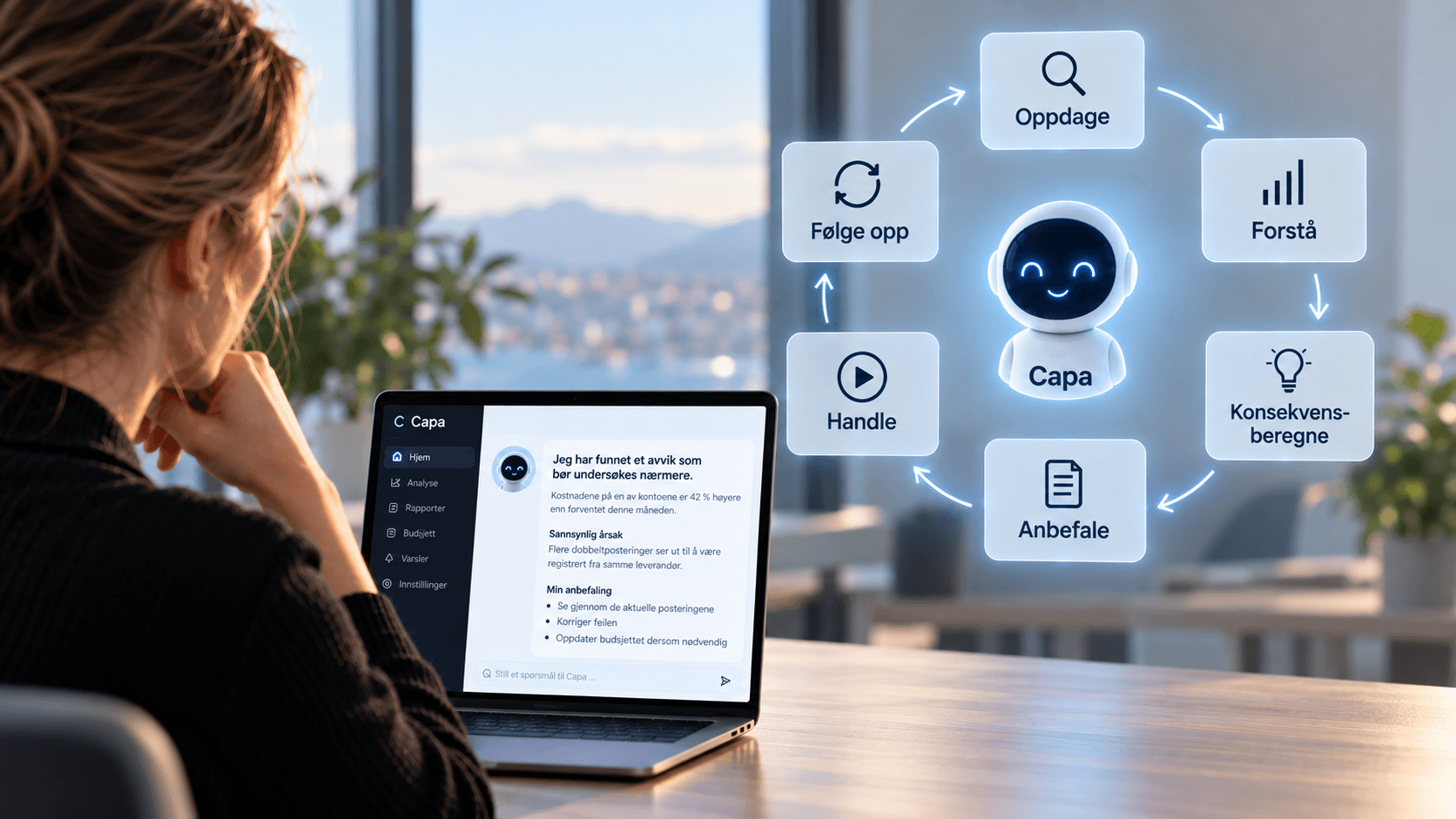
We knew something was off. Capa found out what.
We found an error in our own numbers and handed the problem to Capa. The error was found, but the interesting part was something else: how it was discovered, understood, and followed up on. That's the loop we're building into Capa, not another chatbot.
Your AI is not the problem
OpenAI's chief scientist is warning against recursive self-improvement. Anthropic reports that Claude now writes more than 80 percent of its own code. But this isn't about the AI assistant you use at work, it's about something else entirely, and the difference matters.
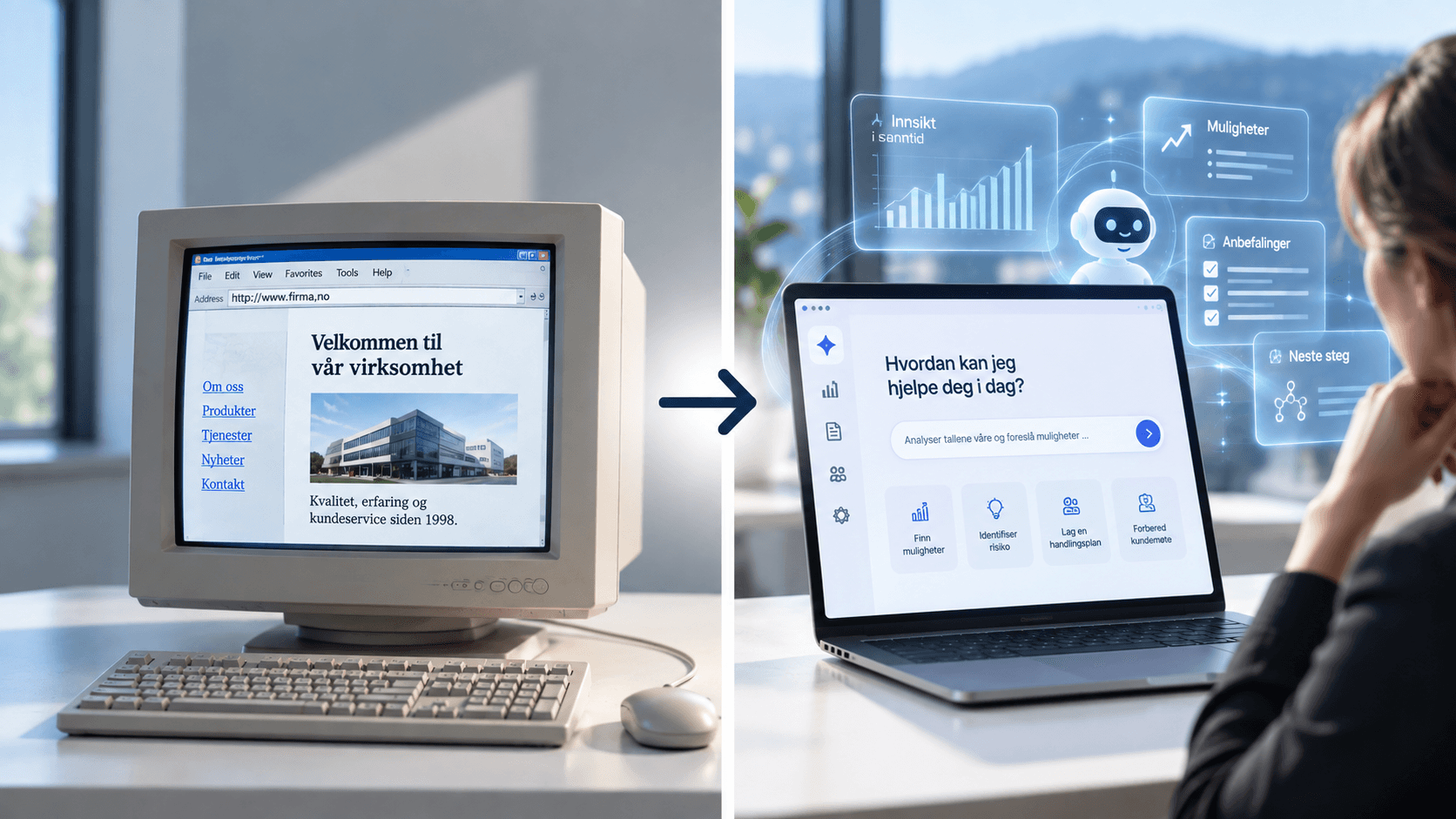
We're using AI the way we used the internet in the beginning
When the internet arrived, we put the brochures online and thought it was fantastic. Now we're doing the same with AI: using a powerful new tool to do the old job a little faster. McKinsey's fresh State of AI survey shows that only 6 percent of organizations actually redesign their workflows around the technology. That's where the real gain lies.
Who gets paid when accounting does more of the work itself?
A new discount agreement between Regnskap Norge and Fiken looks like it's about system costs. But the same hour technology frees up can either be billed away to the customer, or used for advice the customer actually needs.
“We need someone who has fallen flat on their face”
A veteran board colleague said something I've never forgotten: we need someone who has truly failed. It changed not just how I judge other leaders, but how I see my own hardest chapters.
Shadow AI: one in three use AI outside the firm's control
Everyone reads the new AI numbers as a growth curve. We read them as a governance curve pointing the wrong way: usage has outrun approval, which makes shadow AI a standardisation problem for accounting firms – not a technology problem.
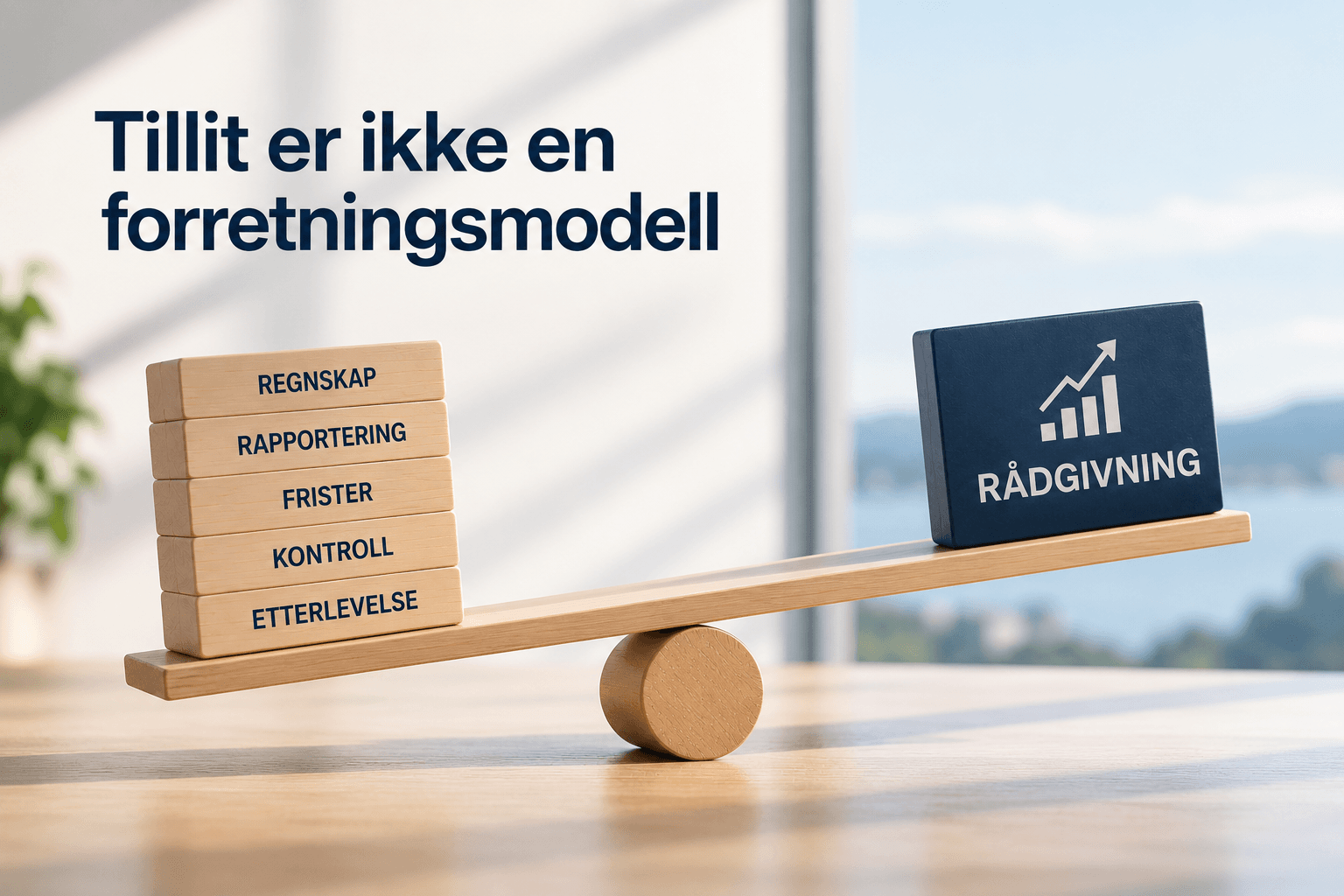
Trust Is Not a Business Model – Accounting's 2027 Choice
The Norwegian accounting profession enjoys a stable, strong reputation and rising pride among its own people. Capassa reads the new survey as unused capital with an expiry date – because clients' AI use is growing faster than firms' service catalogues.
The accounting industry is sitting on a gold mine. Are you digging?
Most accounting firms agree advisory work is becoming more important. Few know how much of today's revenue actually comes from it. That paradox is worth understanding.
AI use has doubled: who gets paid for the time firms save?
More than half of Norwegian businesses now use AI, and the main benefit is time saved. In an hourly accounting model, saved time is simply a smaller invoice — unless that time is given a price of its own.
“You're way too aggressive on AI”
A comment from a colleague stopped me in my tracks. I took it as a compliment, not because the goal is to use as much AI as possible, but because I think the biggest risk right now is learning too slowly.
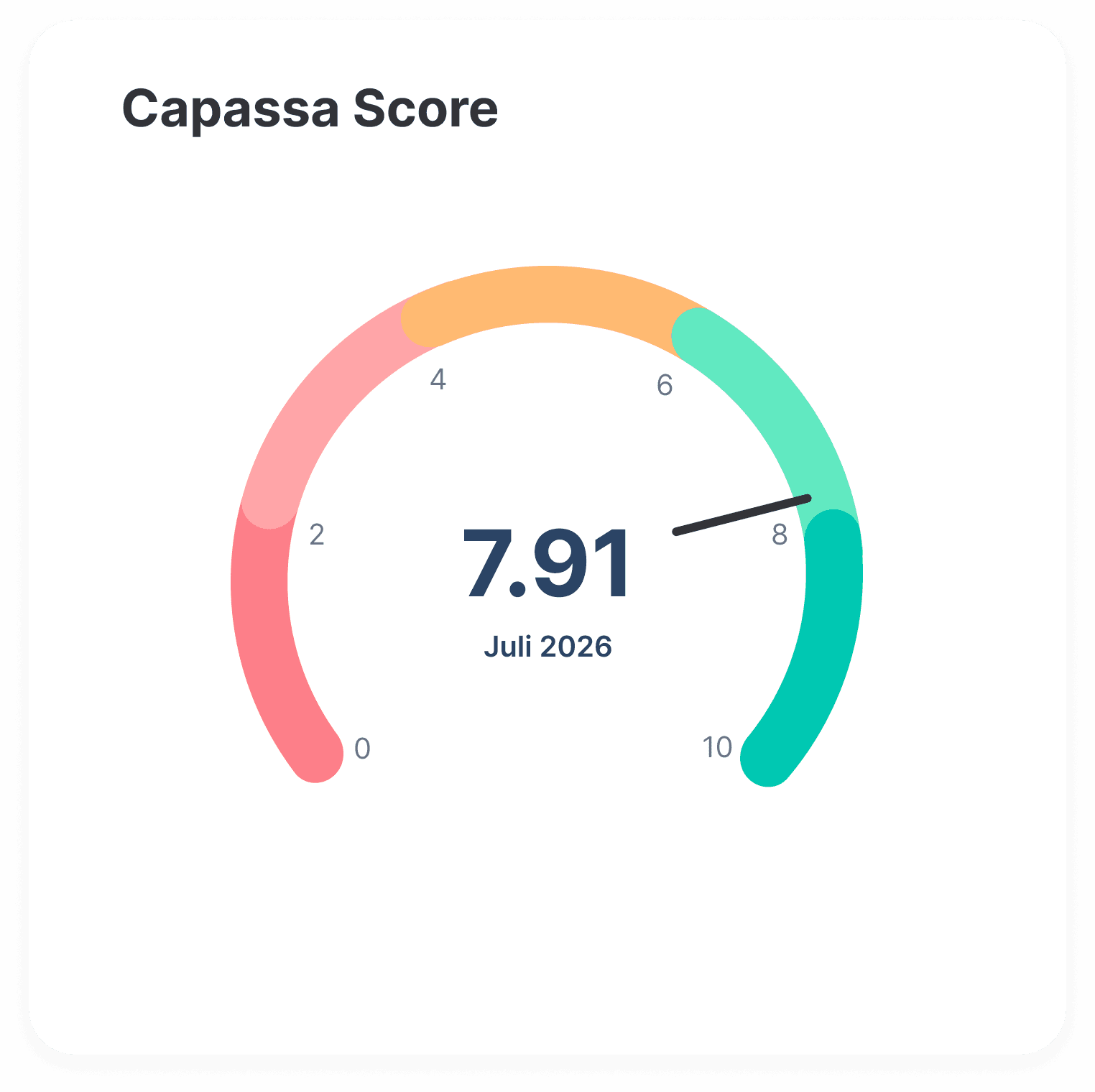
Do you know how strong your business really is?
Capassa Score gives you a simple picture of your company's financial strength, and you can now test your score for free with only the company name.
Capassa launches GRFS as part of the workflow
Capassa is launching GRFS functionality as an integrated part of the workflow, helping accountants collect documentation, follow up quality work and see what needs attention without having to remember everything.
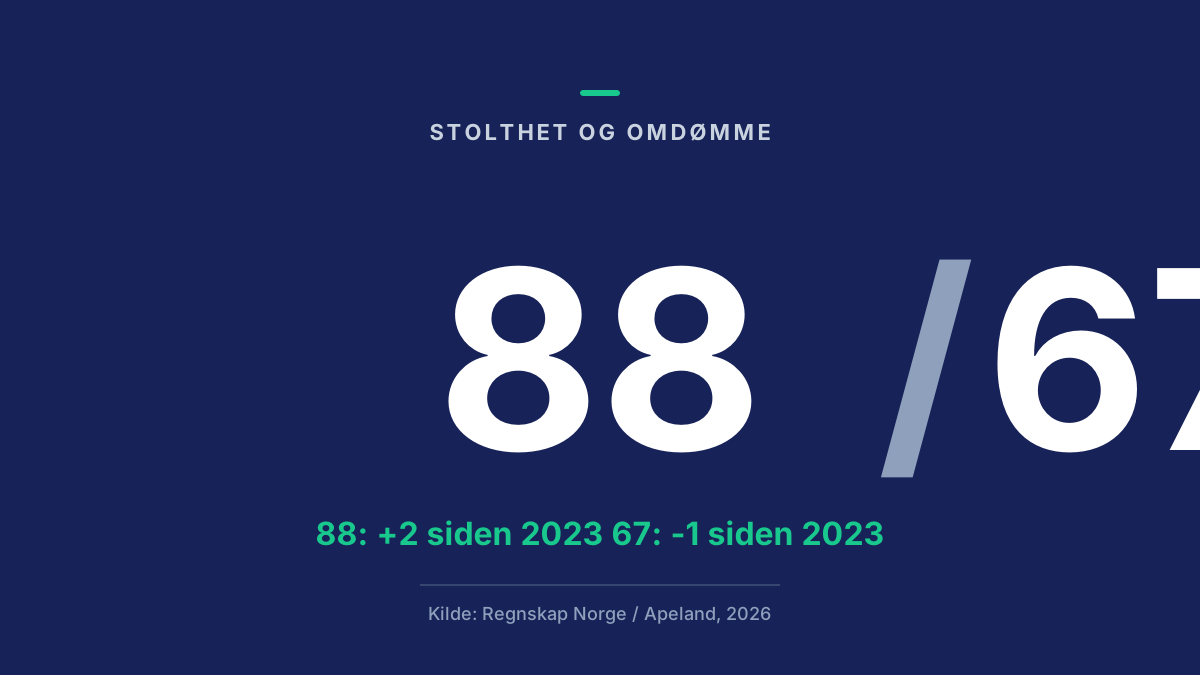
Pride is rising faster than recognition: 88 versus 67
The Norwegian accounting industry's own pride climbs to 88 points, while its reputation among the public sits still at 67. The gap is not a communication problem — it is that advisory impact never becomes visible in the client's own numbers, and therefore never gets priced.
When everything is important, what do you do first?
The to-do list never ends, and AI is only making it longer. When everything feels important, how do you know what to actually do first?
Your budget isn't lying. But is it still telling the truth?
We spend a lot of time building budgets, but few of us ask the question halfway through the year: if you built it again today, would it look the same? A personal reflection on moving from a static budget to a rolling forecast.
Client numbers are falling for the first time. The growth mechanics are breaking.
Across the industry, Regnskap Norge's figures are being read as an AI story. Capassa reads them as something more fundamental: the budget mechanics that have funded Norwegian accounting firms for decades have lost their most important driver.
We haven't just launched a new website. We've clarified what we believe.
Over the summer we have built a new website for Capassa. It isn't about a prettier design, it's about becoming clearer on what we actually believe.
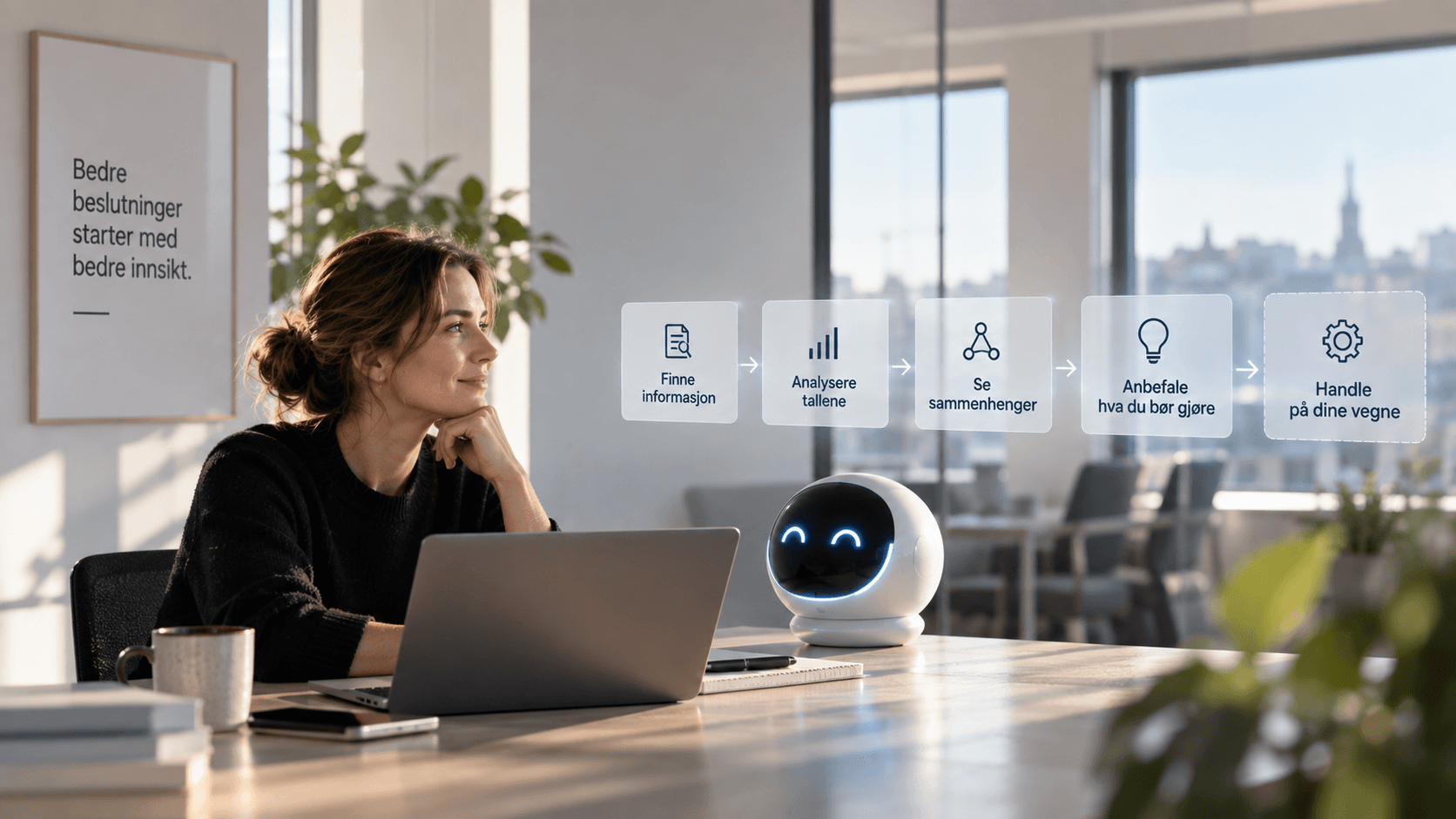
AI does not make your business smarter. Your decisions do.
A recent research paper points to something important: AI does not produce better results because it automates more, but because it enables the business to make better decisions.
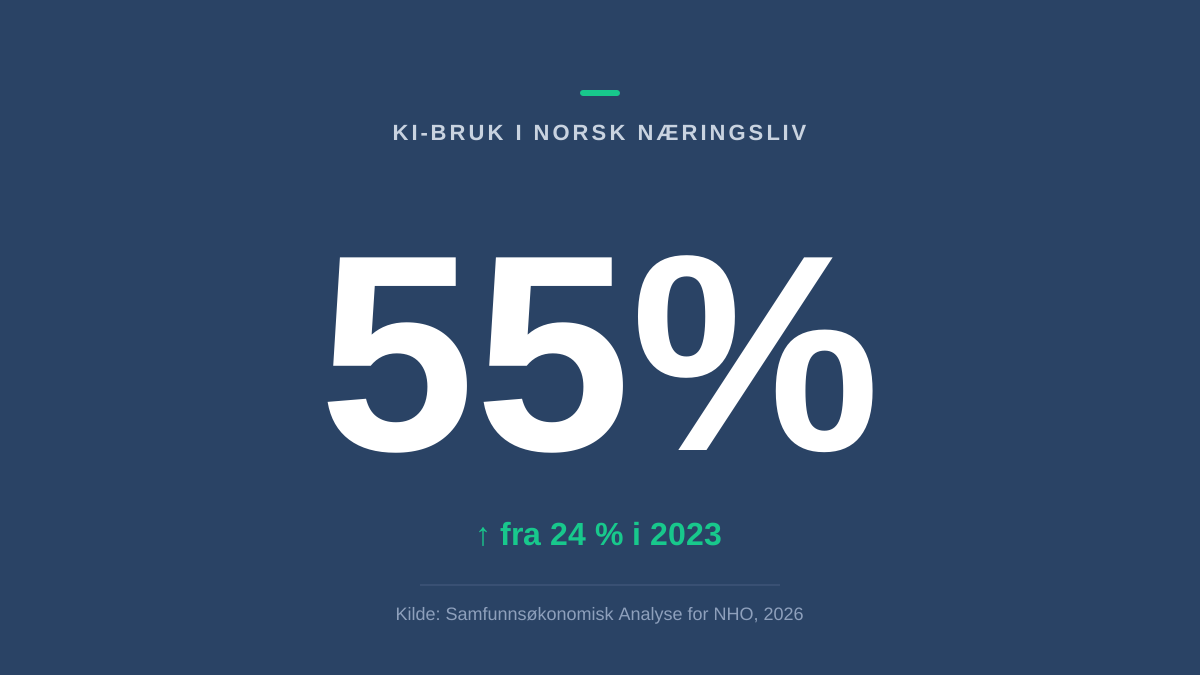
55% use AI – but the gains don't show up in the accounts
AI adoption in Norwegian business has more than doubled in two years, yet the effects still cannot be traced in the accounts. That makes the accounting firm the only party able to determine whether the gains exist at all.
Digitalisation cuts hours – wage growth eats the gain
Norges Bank's latest business survey shows digital solutions are only just beginning to ease staffing needs – while wage expectations have been revised upwards. The outcome is settled in three metrics most companies review only once a year.
55% use AI – only 10% have integrated it into operations
More than half of Norwegian companies use artificial intelligence, but only one in ten say it is well integrated. That gap explains why the gains rarely show up in the accounts – and which figures actually capture them.
73% of CFOs believe AI will improve the business. But what does ‘improve’ actually mean?
A new Deloitte survey shows that 73 per cent of UK CFOs believe AI will improve business performance, up from 39 per cent two years ago. But what does ‘improve’ actually mean?
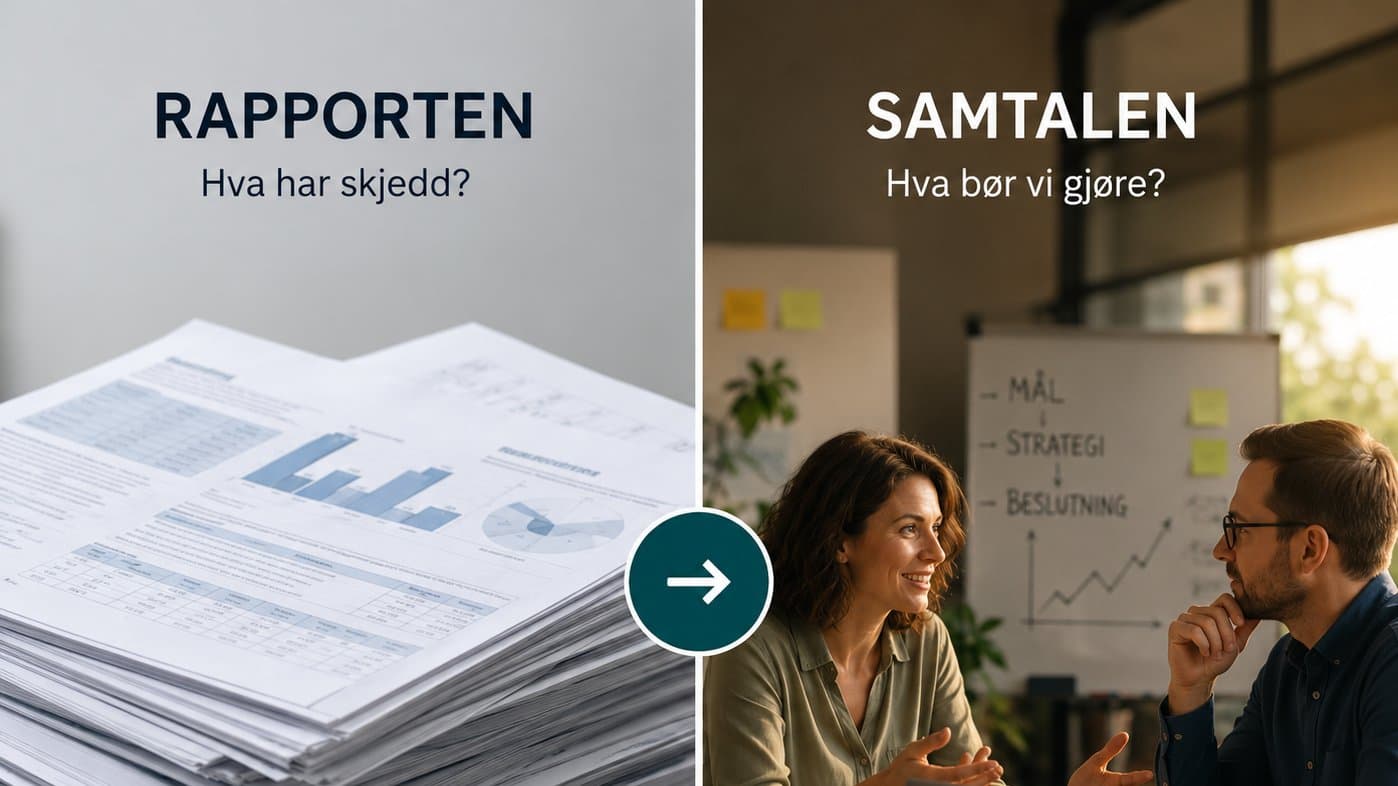
When did the report become more important than the decision?
A few weeks ago I was in a discussion with several accountants about how AI will change the profession. When I asked how many of the reports they send are actually used to take a decision, the room went quiet.
The best companies do not work faster. They work earlier.
It is easy to assume that growth is about pace. But among the companies I meet that succeed best, it is about something else: seeing what is about to happen, before it happens.
Everyone is buying accounting firms right now. But how will they actually make them more efficient?
Consolidation in the accounting sector does not sort itself out simply because more firms end up under the same umbrella. It takes something more.
3 signs your accountant is ready to become an adviser
Accounting matters, but in 2026 it is no longer enough. Here are three signs that you, or your accountant, are already on the way to becoming an adviser, without anyone having called it that yet.
Get your free Capassa Score in under a minute
All you need is the name of the business. See where you stand, completely free.
Financial control is the most underrated form of sustainability
When we talk about sustainability, most people think of climate and the environment. But the most common reason good workplaces disappear is far closer to home: businesses that lose control of their finances.
New integration: Azets Complete Regnskap
Capassa now connects to Azets Complete Regnskap. The system is built on the Unimicro engine, which Capassa already integrates with.
New integration: Eika Regnskap
Capassa now connects to Eika Regnskap. The system is built on the Unimicro engine, which Capassa already integrates with.
New integration: DNB Regnskap
Capassa now connects to DNB Regnskap. The system is built on the Unimicro engine, which Capassa already integrates with.
New integration: SpareBank 1 Regnskap
Capassa now connects to SpareBank 1 Regnskap. The system is built on the Unimicro engine, which Capassa already integrates with.
New integration: Unimicro
Capassa now connects to Unimicro, the accounting engine behind the systems of SpareBank 1, DNB, Eika and Azets, among others.